Our History
The following are excerpts that are drawn from the manuscripts of a book currently being written by Pastor Patrick Herbert, dealing with the history of Free Seventh-day Adventists. Pastor Herbert is the senior pastor of Berean Church of Free SDA and is chairman of the Executive Committee of the International Association of Free Seventh-day Adventists.
The Beginning Of The Colored Work
In this section we shall consider the circumstances that led up to the birth and development of the Free Seventh-day Adventist movement. To better understand how and when Free Seventh-day Adventists came into existence, we must first take some time to focus on a part of Adventist history that deals with the work that was done for and by colored members of the Adventist church in the early years of its existence. Therefore, let us now take a close look at some aspects of the history of the Seventh-day Adventist Church that will provide us relevant information on the origin of the Free Seventh-day Adventist movement.
When the Adventist movement began in the early 1800s blacks were included among the foundational members of the church. This fact can be seen in the historical records of the Seventh-day Adventist Church. Church historians unequivocally show that in the 1830s there were black “adherents of the Adventist (Millerite) movement.” 1 In the 1840s a man by the name of William Ellis Foy, who was described as “a tall light-skinned colored man,” received more than one vision directly “relating to the near advent of Christ and to last day events.” 2 Foy received his first vision in the year 1842. However, one of the reasons he later gave for his unwillingness to share his visions with others was, as he put it, “the prejudice among the people against those of my color.” 3 Another early Adventist by the name of Hazen Foss also had the opportunity to reveal God’s end time message to the Advent people. Foss was given his first vision in the autumn of 1844, but his response and experience mirrored that of Foy’s before him. Both of these men were called of God before Ellen G. White was given her first vision in December of 1844, which started the beginning of her work in the Seventh-day Adventist Church.

William Miller
To understand the difficulties that were faced by Foy and the colored church members in the developing years of the church, one must closely examine the racial climate that then existed. In the early days of Adventism, while there was some “prejudice against those of [their] color” at the time, it certainly was not as prevalent as it became in later years.4 The historical records of the church reveal that since racial discrimination was not as predominant in the northern states as it was in the South, in its formative years the initial stand of the church regarding race was of such that it could be said that “SDA leaders in the beginning were identified as antislavery in sentiment.” 5 In those days when church race relations were good, history records that in the northern states blacks “would naturally be members of the same churches with white people.” 6 However, as the church membership grew and new converts came into the church, unfortunately racism began to show its evil face within the walls of the remnant church. One of the reasons this happened was due to the fact that the church’s members began to consist “largely of white people from mainline denominations where blacks traditionally had been denied membership.” 7 Therefore, when these new converts joined the church, prejudice and segregation began to be increasingly practiced and eventually became a matter of church policy.
Nevertheless, the spirit of evangelism was very greatly promoted and the Seventh-day Adventist Church grew. The Three Angels’ Messages were advanced through preaching, teaching, printing, and literature distribution. Unfortunately, however, even then there existed an area of great neglect on the part of leaders of the Adventist organization. Men in responsible positions failed miserably in their commission to introduce God’s truths to His people of “every nation, and kindred, and tongue, and people” (Rev. 14:6). This negligence was especially obvious in respect to their dealing with those who lived in their own country in the southern states of the United States of America. But the prophetess to the Adventist church often reminded both the leaders and members of their Christian duty to all people, including the colored people in the South. This she wrote about extensively as the problem got worse and worse over time.

Hazen Foss
“God cares for the colored people, and if we would cooperate with Him for the salvation of their souls, we must care for them, too, and become laborers together with Him. We need to repent before God, because we have neglected missionary work in the most abandoned part of God’s moral vineyard. There needs to be a stirring up among the members of our churches. There needs to be concern created for our colored brethren at the great heart of the work. We should rouse up to the interest that true Christians ought to feel for those who are depressed and morally degraded. The fact that their skin is dark does not prove that they are sinners above the white race. Much of their depravity is the fruit of the neglect of the white people. They have not felt the sympathy that they ought to have felt for the abandoned and wretched. Those who profess to love Christ should have worked for their colored brethren until hope would have sprung up in their hearts. Many are completely discouraged, and they have become stolid because they have been neglected, despised, and forsaken. The poor and unfortunate are numbered by thousands, and yet we have looked on indifferently, and seen their sorrow, and have passed by on the other side. Their degraded condition is our condemnation. The Christian world are guilty because they have failed to help the very ones who most need help. Christ says, ‘I am not come to call the righteous, but sinners to repentance.’” 8
As a result of the encouragement and the repetitive counsels given by God through His servant, Ellen G. White, a co-founder of the Seventh-day Adventist organization, plans were eventually put into operation to share the Adventist message with colored people in the southern states of the United States of America. Such a venture was entered upon at a time when colored people were very much oppressed and neglected, and this condition of things was especially prevalent and prominent in the South. Again and again Ellen White spoke out on this serious and disturbing matter, stating, “Sin rests upon us as a church because we have not made greater effort for the salvation of souls among the colored people” and “the way this matter has been treated by some is an offense to God.” Also, as far as interracial worship in general was concerned, Ellen G. White made it clear to church leaders that they had “no license from God to exclude the colored people” from their “places of worship” and further declared, “Treat them as Christ's property, which they are, just as much as yourselves. They should hold membership in the church with the white brethren.” 9 This messenger to the church reiterated time and time again, “The Lord has looked with sadness upon the most pitiful of all sights, the colored race in slavery. He desires us, in our work for them, to remember their providential deliverance from slavery, their common relationship to us by creation and by redemption, and their right to the blessings of freedom.” 10

James & Ellen White
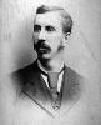
It was not until some years later this work was really started in the South, amidst the unfortunate and difficult circumstances that then existed. However, through the power of the Holy Spirit, those who pioneered this work were very effective and many colored people accepted the Adventist message in the South. Among those who took on this unpopular task was Ellen White’s own son, James Edson White. At the end of the nineteenth century, this brave young man was led to step out as a pioneer of this unpopular work aboard The Morning Star boat. He was not afraid to leave the confines of his familiar surroundings and fearlessly answer the call to work in behalf of the colored people in the South. Edson moved forward undaunted by this very difficult task out of pure love for his fellow man. Of his successful labors many things have been said and articles written.
“The Morning Star was built on the banks of the Kalamazoo River at Allegan, Michigan, in 1894, just after Edson’s reconversion. It was his ambition, and the ambition of his close friend Will Palmer, to open up a work among the blacks in the Deep South. The boat would provide transportation along the twisting waterways of the Mississippi and its tributaries, as well as house the workers and furnish a portable meeting place for the people.” 11
His mother, Ellen G. White, wrote years later, “From the many remarkable and interesting experiences that Edson and his associates have had on The Morning Star, and because of the part it has acted in an important and blessed work, Edson has regarded it as different from an ordinary piece of property, and so have I.” 12
Due to Edson White’s work on The Morning Star boat and the earnest efforts of others who also labored in this previously neglected southern field, the Adventist work in the southern states grew rapidly. God richly blessed these labors and many notable black ministers and evangelists were raised up in the Seventh-day Adventist Church. A well-known black leader and author in the Adventist Church, W. W. Fordham, mentions the following prominent black leaders who labored earnestly to share the Adventist message among those of color:
Edson White
“In 1894 there were approximately 50 Colored Seventh-day Adventists in the United States. With additional Colored leadership, the work began to develop under the strong evangelistic preaching of such men as L. C. Sheafe, John Manns, Sidney Scott, J. K. Humphrey, J. H. Laurence, G. E. Peters, P. C. Rodgers, M. C. Strong, T. B. Buckner, J. M. Campbell, M. G. Nunez, B. W. Abney, H. D. Green, J. G. Dasent, and John Allison.” 13
These men mentioned above, along with others who joined the church in later years, such as Walter W. Fordham, Charles E. Dudley, Charles E. Bradford, E. Earl Cleveland and Charles D. Brooks, became influential leaders among the colored people in the Seventh-day Adventist Church. Through the powerful and effective labors of these dedicated and hard-working Adventist preachers the Three Angels’ Messages were spread and many people of color joined the Seventh-day Adventist Church in different parts of the United States, the Caribbean, and in other parts of the world.
However, despite the great successes and achievements of the black leaders in the latter years of the Seventh-day Adventist Church, it is very important for us to consider the experiences of the black Adventist leaders who came before them. Those who came into the Adventist church in the early years when new church policies were introduced. These new church policies precipitated major changes in human relations within the church and caused serious problems that later resulted in divisions arising in the denomination and eventually the birth of the Free Seventh-day Adventist movement.
1. Seventh-day Adventist Encyclopedia, Revised Edition, Commentary Reference Series, Vol. 10, Review and Herald Publishing Assoc., Washington, D.C. 1976, page 1192
2. Ibid, page 474
3. Ibid, page 475
4. Ellen G. White: The Early Years, by Arthur L. White, Vol. 1 - 1827-1862, Appendix B, (1985), page 489
5. Seventh-day Adventist Encyclopedia, Revised Edition, Commentary Reference Series, Vol. 10, Review and Herald Publishing Assoc., Washington, D.C. 1976, page 1192
6. Ibid
7. We Have Tomorrow, by Louis B. Reynolds, Review and Herald Publishing Assoc., Washington D.C., 1984, page 302
8. The Southern Work, by Ellen G. White, Review and Herald Publishing Assoc., Washington, D.C., 1966, page 35
9. Ibid, page 15
10. Testimonies For The Church, Vol. 7, by Ellen G. White, Pacific Press Publishing Assoc., Boise, Idaho, 1948, page 223
11. Ellen G. White: The Early Elmshaven Years, by Arthur L. White, Review and Herald Publishing Assoc., Hagerstown, MD, 1981, Vol. 5, p. 60
12. Manuscript Releases, by Ellen G. White, E. G. White Estate, Inc., Silver Spring, Maryland, Vol. 3, 1993, page 270.
13. Righteous Rebel, by W. W. Fordham, Review and Herald Publishing Assoc., Washington, D.C., 1990, page 134
Church Segregation Results in Free Adventism
In the beginning of the Seventh-day Adventist Church segregation was not accepted or practiced in its congregations. Although its membership was predominantly white, both white and black church members worshipped together. Church history interestingly shows that even in the South, where initially there were very few black converts to Adventism, it was “the custom in pre-Civil War days [that] slave church members had belonged to their masters’ congregations;” 1 in other words, they both attended the same church. Unfortunately, however, as more and more colored members began to be brought into the faith and the racial climate got worse, church leaders began to adopt new practices and policies, and people of color were denied equal rights within the Seventh-day Adventist Church.
One observer who joined the church at the turn of the 20th century and witnessed the gradual changes in the church, was Elder John Manns, who shared his perspective of the situation in these words, “About ten years the two races experienced little or no difficulty in the North and West” as there existed “equal enjoyment of religious rights and privileges,” however, “as the denomination grew in popularity and influence, race prejudice began to engender Negro proscription,” and when “the number of the Negroes increased in the churches, race friction and proscription grew more rapidly.” 2

The First SDA Church
The Spirit of Prophecy made it clear that in some instances it was necessary for certain adjustments to be made in different parts of the missionary field in order to advance the truth. The church was instructed that these cautionary measures be taken especially in those cases where “demanded by custom or where greater efficiency is to be gained.” 3 These words of wisdom and caution for flexibility in carrying forward God’s work can be appreciated in light of the fact that it is “also a matter of record in American history that in the 1890s, in a period of economic and political unrest, segregation increased sharply, and many legal restrictions date from that time.” 4
Although the need for operating with greater caution under certain circumstances was understood, church leaders often still tightened the cords of segregation and inequality in circumstances where it was absolutely unnecessary. Hence, those who were supposed to represent Christ and His principles to all men sadly fell into the devil’s trap of exaggeration and extremism by adopting a fixed policy on race relations.
“In 1890 Kilgore [a leader of the church’s work in the South] reported to the General Conference Committee: ‘The work in the South for the White population will not be successful until there is a policy of segregation between the races.’ The policy, referred to by later Adventist historians as the ‘Kilgore policy,’ was voted by the General Conference in 1890. The segregation of individual Adventist churches was now official denominational policy. Though this practice was, as one Adventist historian put it, ‘shaped by policy rather than principle,’ it eventually came to be taken for granted so widely that a majority of Seventh-day Adventist members, particularly in areas in which segregation was the custom, believed it to be a fundamental teaching of the church.” 5
Jesus' Baptism and Anointing by The Holy Spirit
Despite the policy adopted by the leadership of the Seventh-day Adventist Church, Ellen G. White, the church’s prophet, nevertheless tried her best to point leaders and members to the principles and teachings of God’s Word regarding matters of this nature:
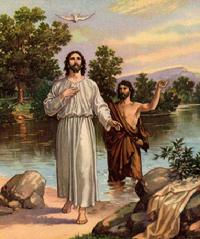
“There has been much perplexity as to how our laborers in the South shall deal with the ‘color line.’ It has been a question to some how far to concede to the prevailing prejudice against the colored people. The Lord has given us light concerning all such matters. There are principles laid down in His Word that should guide us in dealing with these perplexing questions. The Lord Jesus came to our world to save men and women of all nationalities. He died just as much for the colored people as for the white race. Jesus came to shed light over the whole world. At the beginning of His ministry He declared His mission: ‘The Spirit of the Lord is upon me, because he hath anointed me to preach the gospel to the poor; he hath sent me to heal the brokenhearted, to preach deliverance to the captives, and recovering of sight to the blind, to set at liberty them that are bruised, to preach the acceptable year of the Lord.’” 6
Although church leaders were fully aware of these counsels from the pen of Inspiration, they sought to implement their unChristlike policy everywhere, and not just in certain circumstances that existed in parts of the South. Nevertheless, many blacks saw light in the Three Angels’ Messages and still joined the Seventh-day Adventist denomination. Over the years, however, things got worse and several attempts were made by black SDA ministers to bring about necessary changes in church policies, but their efforts fell on deaf ears. Among those who sought to make such changes in the early years were Elder Charles M. Kinny, the first black ordained SDA minister, Elder Lewis C. Sheafe, Elder George E. Peters, Elder James K. Humphrey, Elder John W. Manns, and others. But as things worsened throughout the years, the situation eventually resulted in increased defections from the organized body as many colored members began to separate themselves from the church. Those who made attempts to bring about the needed changes were often inspired by the open rebukes against racism and segregation, coupled with words of hope, that were often uttered by Ellen G. White in her writings to the church:
“The Black man’s name is written in the book of life beside the White man’s. All are one in Christ. Birth, station, nationality, or color cannot elevate or degrade men. The character makes the man, if a red man, a Chinese man, or an African gives his heart to God, in obedience and faith, Jesus loves him nonetheless for his color. He calls him his well-beloved brother. The day is coming when the kings and lordly men of earth would be glad to exchange places with the humblest African who has laid hold on the hope of the gospel.” 7
Despite the efforts of black leaders and Ellen White to get church leaders to introduce necessary changes, “most white communicants [church members] appeared to be comfortable with a segregated worship.” 8 This state of things continued until many colored church members became discouraged as they saw nothing was being done to improve things. They were convinced that regardless of their efforts to turn things around, church “congregations were not likely to be greatly different from other religious groups in regard to the color line.” 9 As a result, many colored members left the established church. Some departed from the truth forever, while others left the church for a while and eventually returned when things eventually changed. Some retained their church membership, despite the existing conditions, in an effort to fight the racism from within. Others vowed to maintain the original faith but felt it necessary to separate from their former brethren in order to maintain their own sanity and faith, as well as that of others.

Elder Lewis C. Sheafe
Some very prominent black SDA ministers chose to take the last option mentioned above. Though they departed from the church structure, they sought to hold on to the faith. These leaders started self-supporting churches in different places, free from the control of the established body of the General Conference of Seventh-day Adventists. Among them were, Elder Lewis C. Sheafe, who pastored the First Seventh-day Adventist Church of Washington, D.C., the People’s SDA Church, and other churches, but later left and became pastor of the first Free Seventh-day Adventist Church, which was called, Berean Church of Free Seventh-day Adventists; Elder James K. Humphrey, the pastor of First Harlem church in New York City, which also broke away and became the United Sabbath Day Adventist Church; and Elder John W. Manns, who later left the body and became the founder of the General Assembly of Free Seventh Day Adventists. Thus, through these men historic or self-supporting Adventist churches were formed and Free Adventism was born. The members of this new movement soon began to be known by the name that they later adopted, Free Seventh-day Adventists. Thus, segregation resulted in the emergence or birth of Free Seventh-day Adventism.
It is this backdrop of neglect and injustice exhibited by church leaders towards those of their “own flesh” or of “one blood” (Isa. 58:7; Acts 17:26) that eventually gave rise to a series of exoduses from the established body. As a result, Free Seventh-day Adventist Churches arose in many different parts of the United States, the Caribbean, and Latin America (including Panama, Costa Rica, and Cuba). It is important to note that most of these separations occurred after Ellen White’s death in 1915, since matters involving the rights due to colored people in the church were not rectified until many years after she passed away. Among those self-supporting churches that arose shortly after her death was one whose foundation was laid in 1913 under the denomination but departed in 1916 (one year after Ellen White died). This church in Los Angeles California was called Berean Church of Free Seventh-day Adventists.
1. "Human Relations, Office of." Seventh-day Adventist Encyclopedia, Review and Herald Publishing Association, 1996, www.blacksdahistory.org/human-relations.html
2. Why Free Seventh Day Adventists, by John Manns, The Banner Publishing Assoc., Savannah, GA, 1920, page 5
3. Testimonies For The Church, Vol. 9, by Ellen G. White, Pacific Press Publishing Assoc., Boise, Idaho, 1948, page 208
4. Seventh-day Adventist Encyclopedia, Revised Edition, Commentary Reference Series, Vol. 10, Review and Herald Publishing Assoc., Washington, D.C., 1976, page 1193
5. Righteous Rebel, by W. W. Fordham, Review and Herald Publishing Assoc., Washington, D.C., 1990, page 67
6. The Southern Work, by Ellen G. White, Review and Herald Publishing Assoc., Washington, D.C., 1966, page 9
7. Ibid, page 12
8. We Have Tomorrow, by Louis B. Reynolds, Review and Herald Publishing Assoc., Washington D.C., 1984, page 302
9. Ibid
Berean Church of Free Seventh-day Adventists

Elder Lewis C. Sheafe
The Free Seventh-day Adventist movement came into existence at a time that can be described as a very dark and sad chapter in Seventh-day Adventist history. It was a period of time that few are aware of and others are too ashamed to talk about, since it was a time when many leaders of the established Seventh-day Adventist Church practiced racial discrimination against their colored members. It is important to note, however, that the messenger to the Adventist Church, Ellen G. White, loved the colored people and did her best to encourage others to work in their behalf.
“I have a most earnest interest in the work to be done among the colored people. This is a branch of work that has been strangely neglected. The reason that this large class of human beings, who have souls to save or to lose, have been so long neglected, is the prejudice that the white people have felt and manifested against mingling with them in religious worship. They have been despised, shunned, and treated with abhorrence, as though crime were upon them, when they were helpless and in need, when men should have labored most earnestly for their salvation. They have been treated without pity. The priests and the Levites have looked upon their wretchedness, and have passed by on the other side.” 1
As we proceed with this historical overview let us now focus our attention upon one of the stories of triumph arising from the determination of some who sought to preserve their faith in the Adventist message, regardless of the odds against them. In the early 1900s a Seventh-day Adventist Church in Los Angeles, California was started and supported by colored members. One of the early periodicals of the church recorded the beginning of this church:
“It was the writer’s privilege to visit the Berean S.D.A. church at this place Sabbath, June 19 [1915]. The company consists of thirty-seven members, in [the] charge of Elder and Mrs. Sheafe. The surroundings gave evidence of the good work being carried on,—a room well filled with earnest and smiling faces, and a neat little house of worship, located in a nice residential district of the city. Elder Sheafe began his work here in December, 1913. The company was organized January 30, this year, and the house of worship dedicated March 17. Elder Sheafe has also built up two other companies in this vicinity. We are glad for the many evidences of God’s care for his work in this growing city. Los Angeles is now the largest city on the coast. It has a large colored population.” 2
Historical records show that when Elder Sheafe “arrived in Los Angeles Dec. 7 [1913]” he went directly to “the Furlong church” 3 where he “then [became the] pastor.” 4 Shortly after his arrival he quickly secured a hall “for meetings, which began Jan. 11, 1914.” 5 From these meetings that were held “in 1914 the [Watts] church was organized” 6 and another congregation, whose foundation was laid in 1913 when “a residence was purchased and converted into a house of worship,” 7 was also strengthened, resulting in “the Berean church on the west side of Los Angeles [being] organized” by Elder Sheafe. 8 This church was later “admitted to the conference” at the fifteenth annual session of the Southern California Conference of Seventh-day Adventists held between, February 18 to 23, 1915. 9

Elder Lewis C. Sheafe
However, due to the racial practices of the day the members of the Berean S.D.A. Church soon decided to break loose from the established body of Seventh-day Adventists and became a self-supporting church. These brethren stepped out by faith to provide a place of worship for downtrodden believers who were originally members of the established Seventh-day Adventist Church in the State of California, and a lighthouse for the promulgation of the Three Angels’ Messages. Within the walls of this humble edifice honest and sincere brethren continued to come together to worship God and study present truth. This they now chose to do, free from the control of men and free from the racial policies that were sanctioned and promoted by the leaders of the established SDA church in those days.
The decision to break away from the main Adventist body arose after the members of the church learned that their pastor, Elder Lewis C. Sheafe, then a highly recognized black Seventh-day Adventist minister and evangelist, had left the established body due to its racial practices. After learning of their minister’s decision, the members of this Berean church decided that they would rather go self-supporting than to remain with the organization while these unfair practices continued. Therefore, on hearing of Elder Sheafe’s decision to depart from the established body, the members of the Berean SDA Church encouraged him to continue to pastor their church. Elder Sheafe fully accepted the invitation and remained in Los Angeles, California, where he became the first minister to pastor this now self-supporting church. This event was carefully chronicled in one of the denominations periodicals:
The decision to break away from the main Adventist body arose after the members of the church learned that their pastor, Elder Lewis C. Sheafe, then a highly recognized black Seventh-day Adventist minister and evangelist, had left the established body due to its racial practices. After learning of their minister’s decision, the members of this Berean church decided that they would rather go self-supporting than to remain with the organization while these unfair practices continued. Therefore, on hearing of Elder Sheafe’s decision to depart from the established body, the members of the Berean SDA Church encouraged him to continue to pastor their church. Elder Sheafe fully accepted the invitation and remained in Los Angeles, California, where he became the first minister to pastor this now self-supporting church. This event was carefully chronicled in one of the denominations periodicals:
“It is with sorrow that we record the fact that one of the colored churches of Los Angeles has withdrawn from the conference. Wednesday evening, September 15, the Berean church, of which Elder L. C. Sheafe was the pastor, passed resolutions withdrawing its membership from the conference. A few days before, Elder Sheafe resigned his position as a public laborer of the Southern California Conference. Among the resolutions passed by the Berean church was one inviting Brother Sheafe to accept the pastorate.” 10
Under the direction of Elder Sheafe the members of the Berean church secured the church on a more solid foundation by incorporating it in the State of California on December 21, 1916, under the name Berean Church of Free Seventh-day Adventists, Inc. 11 As a result of this action, this church became the first Seventh-day Adventist Church on record to register a corporation using the words “Free Seventh-day Adventists” in its name.
During the first decade of its existence as Berean Church of Free Seventh-day Adventists, a faithful church member by the name of Br. Emanuel Beckham played a very important part in establishing the church. Those still living today who knew Br. Beckham in those early years have nothing but kind and positive things to say about this Christian man. This dear brother also faithfully kept the Berean church together at a very critical time for the Free SDA movement, and his contributions were highly spoken of by Elder Mosley, the President of the sisterhood of Free Seventh-day Adventist Churches at that time. When reporting on his visit to the Berean Church of Free Seventh-day Adventists, in Los Angeles, California, in 1931, Elder Mosley later wrote:
“Bro. E. Beckham was at the station of the Southern Pacific lines patiently awaiting my arrival, who afterwards conveyed me to his home, where I made my temporary abode.” Elder Mosley further stated, “Words of thanks were accorded Bro. E. Beckham for his faithfulness in holding the work together till I arrived.” 12

Elder Lewis C. Sheafe
As a result, the work of the Berean church and other Free Seventh-day Adventist Churches continued to progress. However, as the years passed by, a decline in membership began to take place in the Free Seventh-day Adventist movement. One of the factors contributing to this decline in membership was a major change in church policy that was adopted by the established SDA Church. About the mid 1940s, the leaders of the established Seventh-day Adventist body conceded to the old request of black leaders for colored conferences. By doing so, they finally permitted colored members to be involved in the administrative affairs of their own people, which was a sore spot for many colored church members who left the church over the years. Initially, church policy did not allow colored church members to hold leadership or administrative positions in the church. For many years this was the church’s policy, even though “in 1909 the General Conference established the North American Negro Department” for the colored work, 13 but a black person was not permitted to head the Department until almost a decade later.
The church’s new policy in the 1940s regarding the colored work did not come about suddenly or easily. It necessitated a lot of work on the part of black church leaders over the years before it eventually evolved into the birth of Regional Conferences. History shows that this request was officially introduced by Elder C. Kinny in 1889 when he “dropped his bombshell” that to “solve this problem” of racism in the church “there should be the organization of a Colored conference.” 14 Also, at a meeting called by the General Conference and held in Chicago in 1929 another attempt was made by colored leaders. This meeting is still remembered for those famous and unforgettable words expressed to the colored delegates seeking a change in church policy, “Black conferences are out of the question. Don’t ever ask for a Black conference again.” 15 Then in 1944, when black leaders again came together with church officials at a time when the black church membership had grown considerably and circumstances in the world were changing, “the vote to accept and implement the proposal was almost unanimous,” resulting in the birth of Regional Conferences. 16
As a result of this and other developments, many former Free Seventh-day Adventist members and churches decided to go back to the conference. Nevertheless, the Free Seventh-day Adventist movement never ceased to exist, since many members refused to go back under the old leadership. One well-known and highly recognized black Seventh-day Adventist leader, Charles Edward Dudley, wrote concerning the longevity of this movement in one of his books entitled, Thou Who Hast Brought Us Thus Far On Our Way. Outlining the history of the Adventist church he stated, “in 1970 there were still remnants of the Manns’ [Free Seventh-day Adventist] movement.” 17 He thereby showed the longstanding presence of the Free Seventh-day Adventist movement, since there was still evidence of its existence way into the 20th century, long after the change in policy by the General Conference of Seventh-day Adventists. Furthermore, after the turn of the century and into the beginning of the 21st century, through God’s providential plan and leading, the Berean Church of Free Seventh-day Adventists transferred its headquarters to the state of Georgia and registered a dba under the name, Tucker-Norcross Free Seventh-day Adventist Church.
Although many members of the Berean church decided to rejoin the General Conference of Seventh-day Adventists when the church’s policy had changed in the mid 1940s, the Free Seventh-day Adventist movement nevertheless remained in existence. Being a member of the sisterhood of Free Seventh-day Adventist churches, the Berean Church of Free Seventh-day Adventists still continued to exist. Also, this church corporation was never officially dissolved, and even today its original name, Berean Church of Free Seventh-day Adventists, is still recorded on the files of the California Secretary of State as a church in good and legal standing since 1916.
1. The Southern Work, by Ellen G. White, Review and Herald Publishing Assoc., Washington, D.C., 1966, page 19
2. The Gospel Herald, North American Negro Department, The Oakwood Manual Training School Printers, Huntsville, Alabama, Vol. XI, No. 8, August 1915, page 7
3. The Advent Review and Sabbath Herald, Review and Herald, Takoma Park, Washington, D.C., Vol. 91, No. 14, April 2, 1914, page 16
4. Pacific Union Recorder, Pacific Union Conference of Seventh-day Adventists, Glendale, California, Vol. 45, No. 43, May 29, 1946, page 11
5. The Advent Review and Sabbath Herald, Review and Herald, Takoma Park, Washington, D.C., Vol. 91, No. 14, April 2, 1914, page 16
6. Pacific Union Recorder, Pacific Union Conference of Seventh-day Adventists, Glendale California, Vol. 45, No. 43, May 29, 1946, page 11
7. Berean S.D.A. Church 40th Anniversary Celebration—Special commemorative book, October 4-12, 2003, Los Angeles, CA, page 3
8. Pacific Union Recorder, Pacific Union Conference of Seventh-day Adventists, Glendale, California, Vol. 46, No. 28, Feb. 19, 1947, page 9
9. Ibid, Vol. 14, No. 32, March 11, 1915, page 10
10. Ibid, Vol. 15, No. 11, October 21, 1915, page 4-5
11. Information obtained from the incorporation records filed in the office of the California Secretary of State, Sacramento, California (See: “Berean Church of Free Seventh-day Adventists”)
12. Free Advent Banner, Printed by The Banner Publishing Association, Savannah, GA, Vol. 10, No. 2, April 1931, page 2
13. Perspectives: Black Seventh-day Adventist and Church Loyalty, by Charles E. Bradford, D.D., p. 15-16
14. Righteous Rebel, by W. W. Fordham, Review and Herald Publishing Assoc., Washington, D.C., 1990, page 67
15. Ibid, page 71
16. Ibid, page 79
17. Thou Who Hast Brought Us Thus Far On Our Way, by Charles Edward Dudley, Sr., D.D., L.L.D., Dudley Publications, Nashville, Tennessee, 2000, page 40.
The Free SDA Movement Today
Free Seventh-day Adventists find their roots in the formative years of the Seventh-day Adventist Church. They started from very humble beginnings in the early 1900s in a period when segregation and racism was widely practiced in the United States of America and most of its members were people of color and Hispanics or latinos. Since that time, much has changed. Today, the Free Seventh-day Adventist movement is an international body consisting of a multiracial network of Seventh-day Adventist believers who desire to maintain and advance the original beliefs of the Seventh-day Adventist faith.
In modern times, this now interracial movement continues to forge forward with a much greater zeal and determination to promote the original teachings of the pioneers of the Seventh-day Adventist denomination, at a time when many of the original beliefs, worship style, and practices are being compromised by the established Seventh-day Adventist Church. Years before this present condition of things had arisen, it was prophesied in the writings of the Spirit of Prophecy. There the servant of God, Ellen G. White, boldly declared, “Many will stand in our pulpits with the torch of false prophecy in their hands, kindled from the hellish torch of Satan.” 1

Ellen G. White
The unfortunate circumstances that initially caused the Free Seventh-day Adventist movement to come into existence in the first place are really not entirely different from what is currently causing this body of believers to rapidly grow once again. At its inception, those who joined this movement did so because of the struggle against the erroneous beliefs and evil policies then prevalent. As a result of unbiblical views and unChristlike practices that were then being fostered and promoted by the leaders of God’s remnant church, the Free Seventh-day Adventist movement was born. Similarly, today the rapid growth and development of this movement again arises from unbiblical views and unChristlike practices that are advocated and practiced by church leaders. Also, like before, these erroneous inroads into the Adventist faith is bringing unnecessary persecution upon many who, both inside and outside the body, still love the Bible and the Spirit of Prophecy.
It has become evident to some that God’s church today is being led in the wrong direction and our peculiarity as a people is being lost sight of. The late Dr. Ralph Larson, a notable Seventh-day Adventist scholar and lover of present truth, wrote in his book The Real Issues some years ago, “The real issue in our church is truth in conflict with untruth, unauthorized changes in our church’s theology.” 2 In the magazine Landmarks, the editor, Dr. John Grosboll wrote, “The fact that the SDA denomination has strayed significantly from God’s plan for finishing His work is well documented elsewhere.” 3 Also, the book Deceptions of The New Theology, by Dr. Colin Standish and the late Russell Standish declared, “Many Seventh-day Adventists believe that the new theology is a phenomenon of the 1970s. But students of Adventist history have discovered that it has its origins in the earliest days of the Seventh-day Adventist Church.” 4
Today many more Seventh-day Adventist leaders and lay members are recognizing the spirit of compromise that is being manifested by the church. Leaders of the established body are seen to be continually strengthening and consolidating their relationships with those who differ greatly from our faith. Members recognize that it is very dangerous to form these close alliances with unbelievers and that the growing spirit of compromise is changing the face of Adventism worldwide from what it used to be. They are beginning to see and fear that these close ties and confederacies between the established church and other denominations are being pursued even at the expense of the church losing sight of its peculiar faith and precious truths. On matters of this nature the Scriptures ask the question, “Can two walk together, except they be agreed?” Amos. 3:3. Furthermore, the Word of God instructs us to not be “unequally yoked together with unbelievers” (2 Cor. 6:14).
However, in contrast to the spirit of compromise that is now being manifested and encouraged by the established Seventh-day Adventist body, from the very beginning, those who joined the Free Seventh-day Adventist movement have always held a deep respect for the writings of the Bible and the Spirit of Prophecy. Therefore, from its very inception, all who applied for membership in the sisterhood of Free Seventh-day Adventists Churches in the early 1900s were only accepted into the movement “after certifying [their] belief in all the doctrines of truth taught by Seventh Day Adventists, including the Testimonies written by Mrs. E. G. White.” 5
Therefore, today, as in the past, we again see the spirit of compromise in the church is causing a new surge in the growth of the Free Seventh-day Adventist movement. Many present truth believers of all races and ethnic backgrounds are seeing the need for unity and harmony to promote God’s truths for these last days. Presently, however, this cry for freedom emanates not from a sense of racial injustices, as in the past, but instead from the need to keep our message pure. Furthermore, this cry for freedom now stems from a strong desire to be “free” from the control and restrictions of men, “free” to promote the wonderful Three Angels' Messages given to us by the pioneers of the Seventh-day Adventist faith, “free” from the kingly power that is being manifested by those in responsible positions in God’s church today.
1. Testimonies to Ministers and Gospel Workers, by Ellen G. White, Pacific Press Publishing Association, Mountain View, California, 1962, page 409-410
2. Issues: The Real Issues, the Side Issues and the Pseudo Issues, by Ralph Larson, Steps to Life, Inc., Wichita, Kansas, 1992, page 26
3. Historic Landmarks of Adventism (Landmarks magazine), Steps to Life, Inc., Wichita, Kansas, November 2008, page 9.
4. Deceptions of The New Theology, by Colin D. Standish and Russell R. Standish, Hartland Publications, Rapidan, VA, 1989, page 19
5. Free Advent Banner, The Banner Publishing Association, Savannah, GA, Vol. 1, No. 1, November 1920, page 1